

Husbandry
For us here at EMS Dragons keeping your dragon in the appropriate environment is vital which is why you’ll only be able to secure a dragon from us by showing us you have the correct set up. We ensure we stay up to date with the latest expert advise from people like Johnathan Howard aka ‘Beardievet’
Unfortunately we see many people being given poor advise from sources they believe they can trust, such as pet shops, which can end up being costly to both owners and dragons alike! Our recommendations are based on the importance of trying to mimic the dragons natural environment, ensuring they thrive not just survive.
Owning any new pet requires a lot of research to ensure you start well. Here at EMS Dragons we provide that support as part of our service alongside access to a friendly community of other Bearded Dragon owners to ensure you have a place to ask your questions and provide the best for your Dragon.
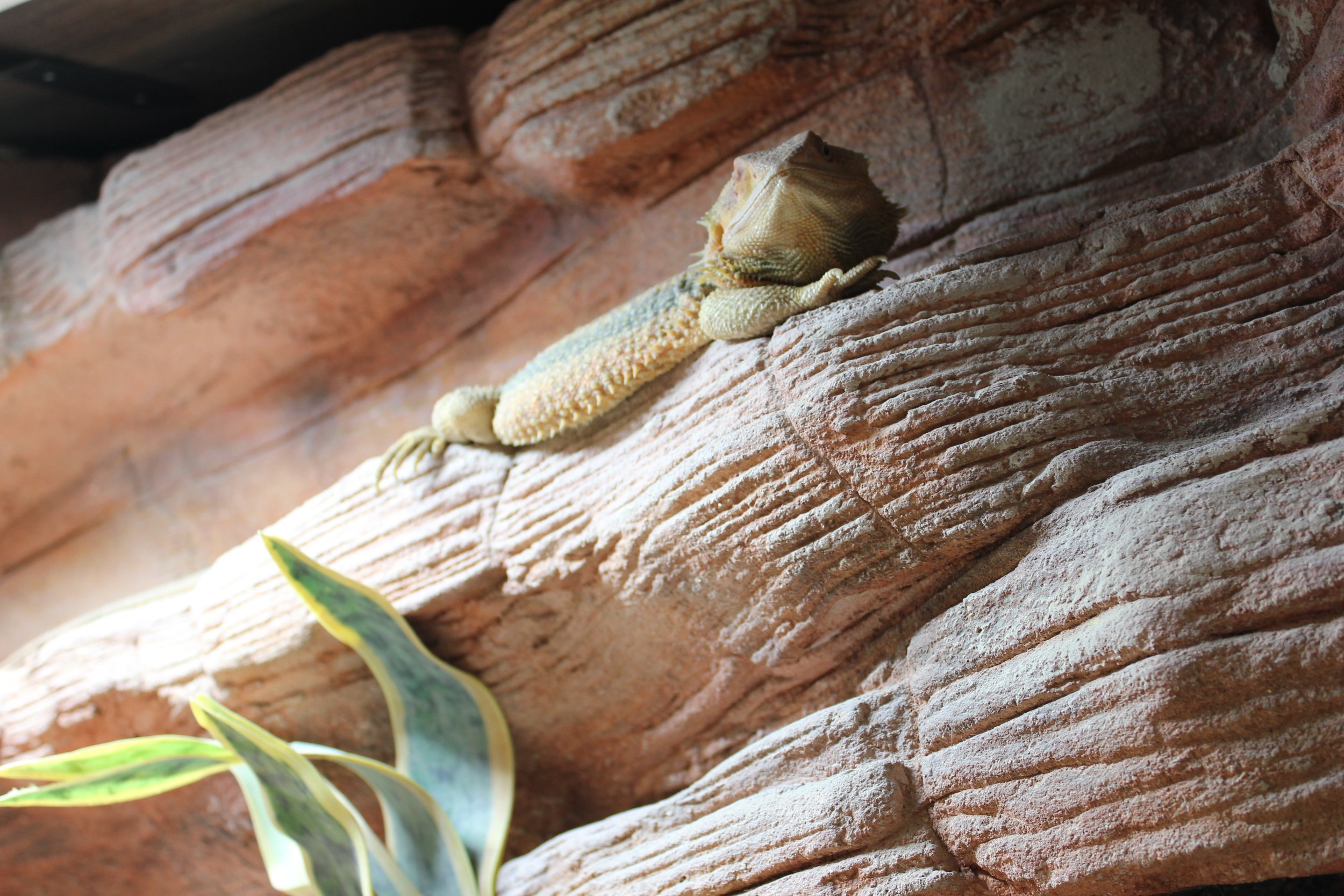
Vivarium
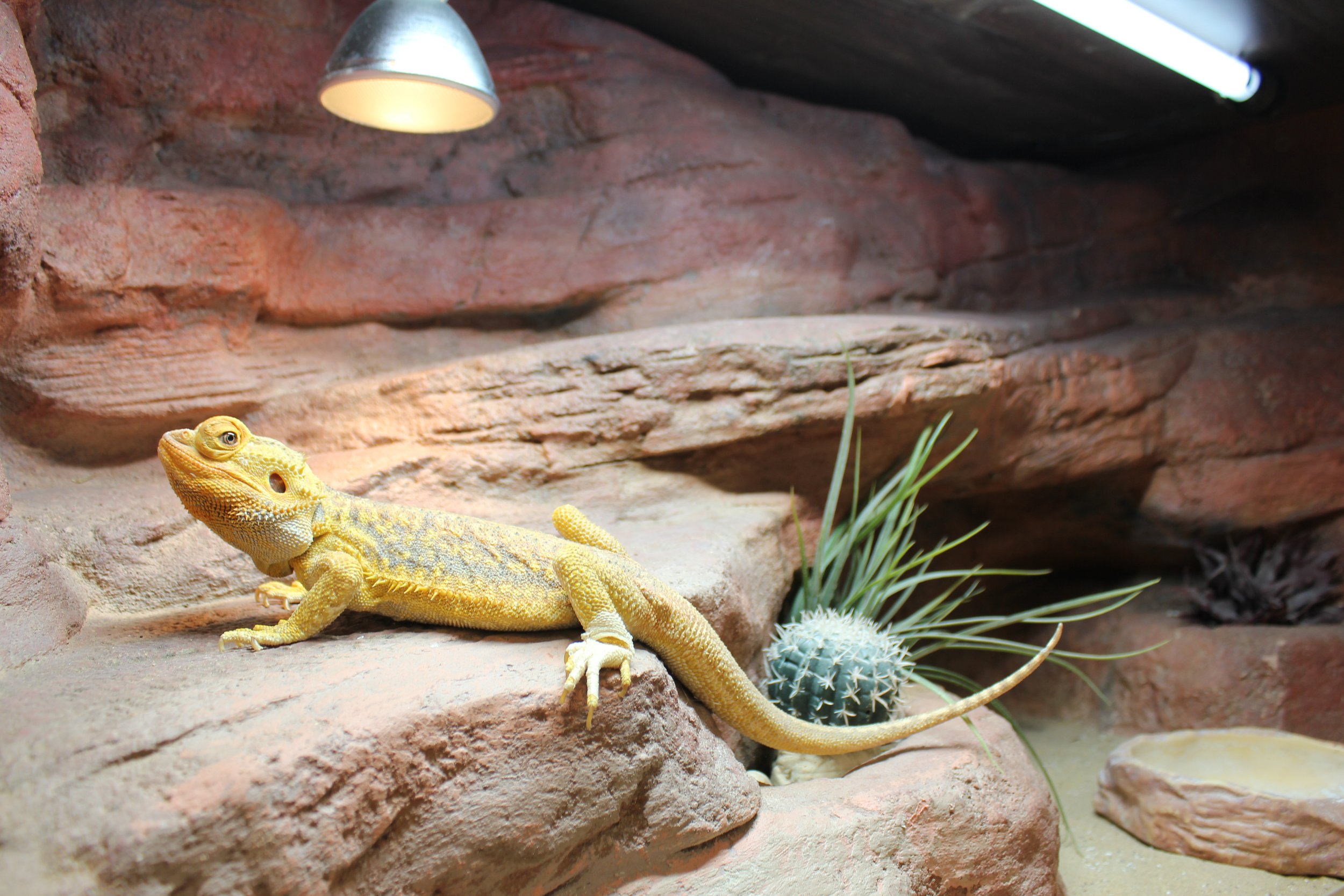
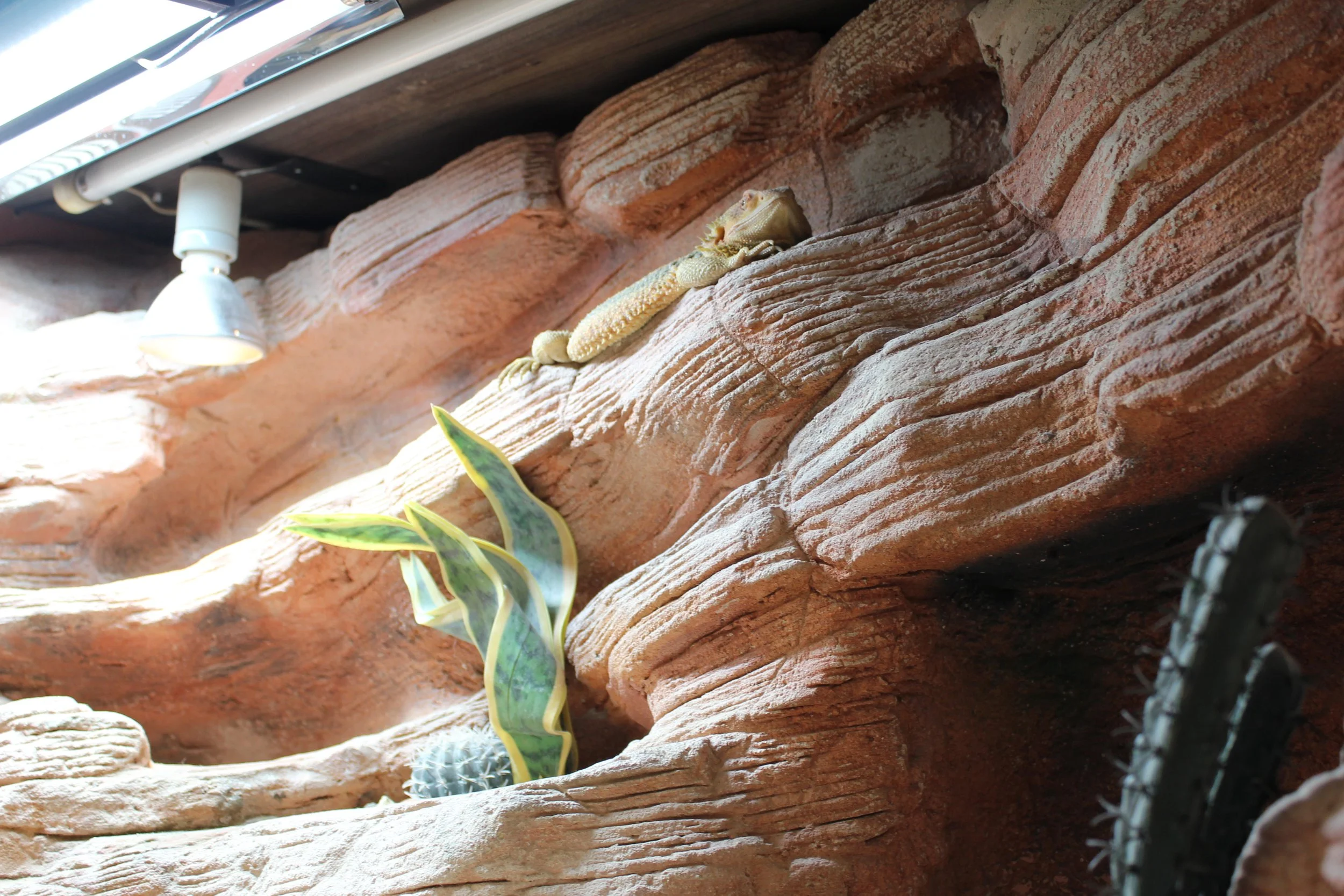
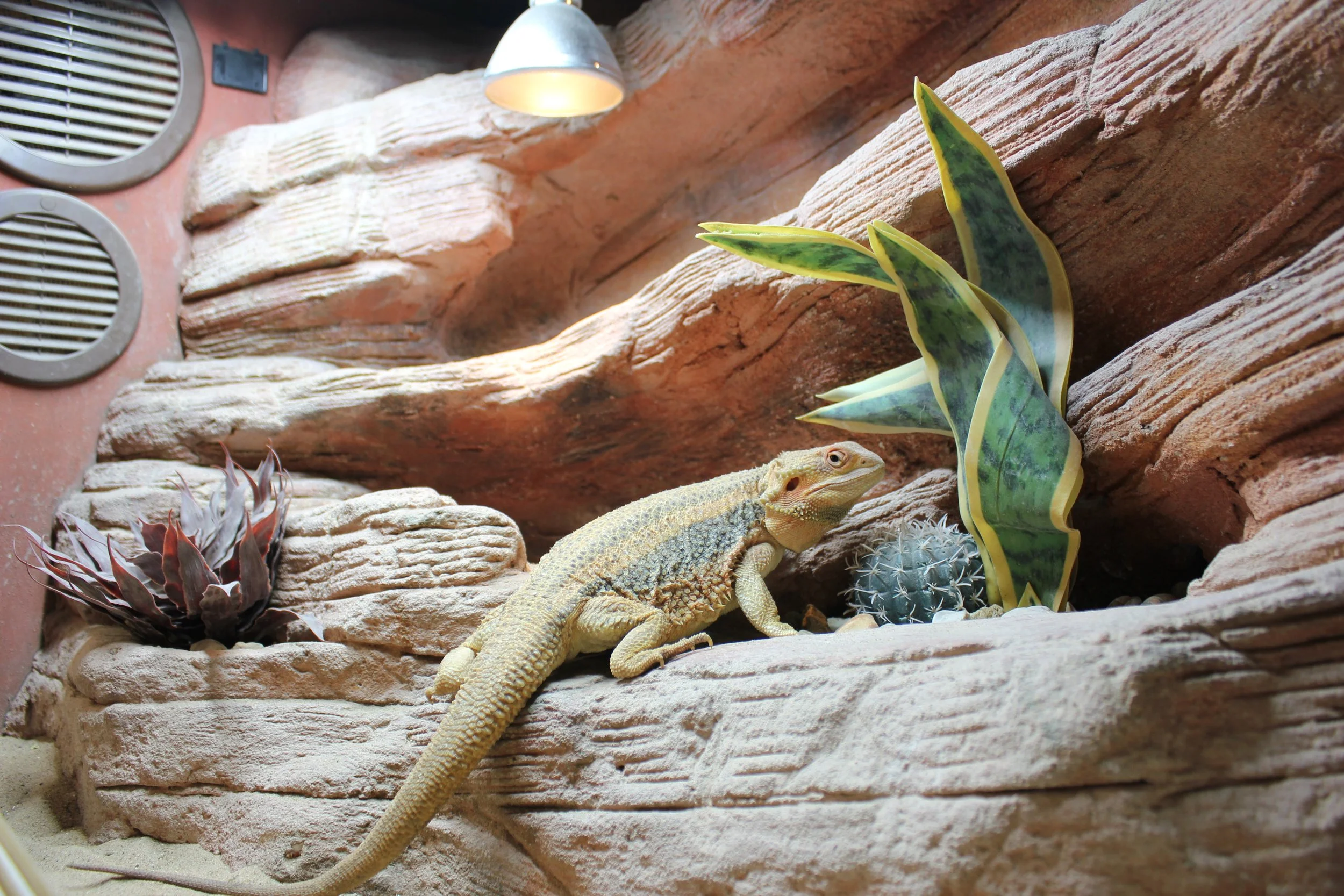
The minimum requirement for a vivarium is 4ftx2ftx2ft. The correct size is AAL (animal activities licensing) approved meaning that is the minimum appropriate size for bearded dragons of any age. This gives your dragon enough room to move around and ensures there is a difference in temperature from ‘cool’ shaded end to the ‘hot’ lighted end. If the vivarium is too small this heat gradient will not be able to be achieved.
The basking bulb should be placed at one end of the vivarium with the UVB and LED going diagonally. The basking bulb should be aligned with the centre of the UVB no more than 2 inches away. You must have a basking platform made out of stone, slate or resin placed directly under the basking bulb so that your dragon is able to bask. The bulb should be 20-25cm from the platform. It is important that your dragon has hides and enrichment in the vivarium also.
Temperature
It is vital that your bearded dragon have the correct temperatures in the vivarium in order for them to be able to digest their food properly. If temperatures are too low this can increase the risk of impaction. You will need to use an infrared gun to measure the surface temperature of the basking platform as opposed to a thermometer which will only measure air temperature. You must have a dimming thermostat to ensure that temperatures do not get too high. The probe should be placed at the cool end (no lighting) a few inches from the floor. The cool side should be between 25-29 degrees and the basking spot (placed directly under the heat bulb on the basking platform) should have a hotspot of around 45 degrees.
Substrate
We advise that from up to six months a bearded dragon should have no substrate at all. That way you can monitor there toilet habits and make sure everything looks normal lowering the risk of impaction. When they are older than six months it’s ok to then use a 50/50 topsoil and play-sand mix or just play-sand. Make sure you cook the substrate beforehand so they are not damp thus minimising humidity. Humidity should not be more than 40% otherwise a bearded dragon can get a respiratory illness. Do not use reptile carpet or coco husk as it carries bacteria and husk can be ingested and cause impaction.
Supplements
The correct supplements are essential to ensure your dragon gets the right balance of vitamins and minerals. Calcium and vitamin D3 are required to prevent illnesses such as Metobolic Bone Disease (MBD). You should liberally dust ALL salad and bugs with Calcium except ONE bug feed per week. This bug feed should be LIGHTLY dusted with RevitaliseD3 instead. Please note that this should be paired alongside the correct UVB kit.
Bathing
You should NOT bathe your dragon as this is not necessary and could cause a respiratory illness that often proves fatal. The only time you should use water is if your dragon is covered in poop. You can then use a small amount of warm water and a toothbrush to gently clean it. Soaking your dragon will not help them to shed as they are dry shedders. Bathing your dragon can also make them poo before they need to, stopping them effectively digest their food.
Salad
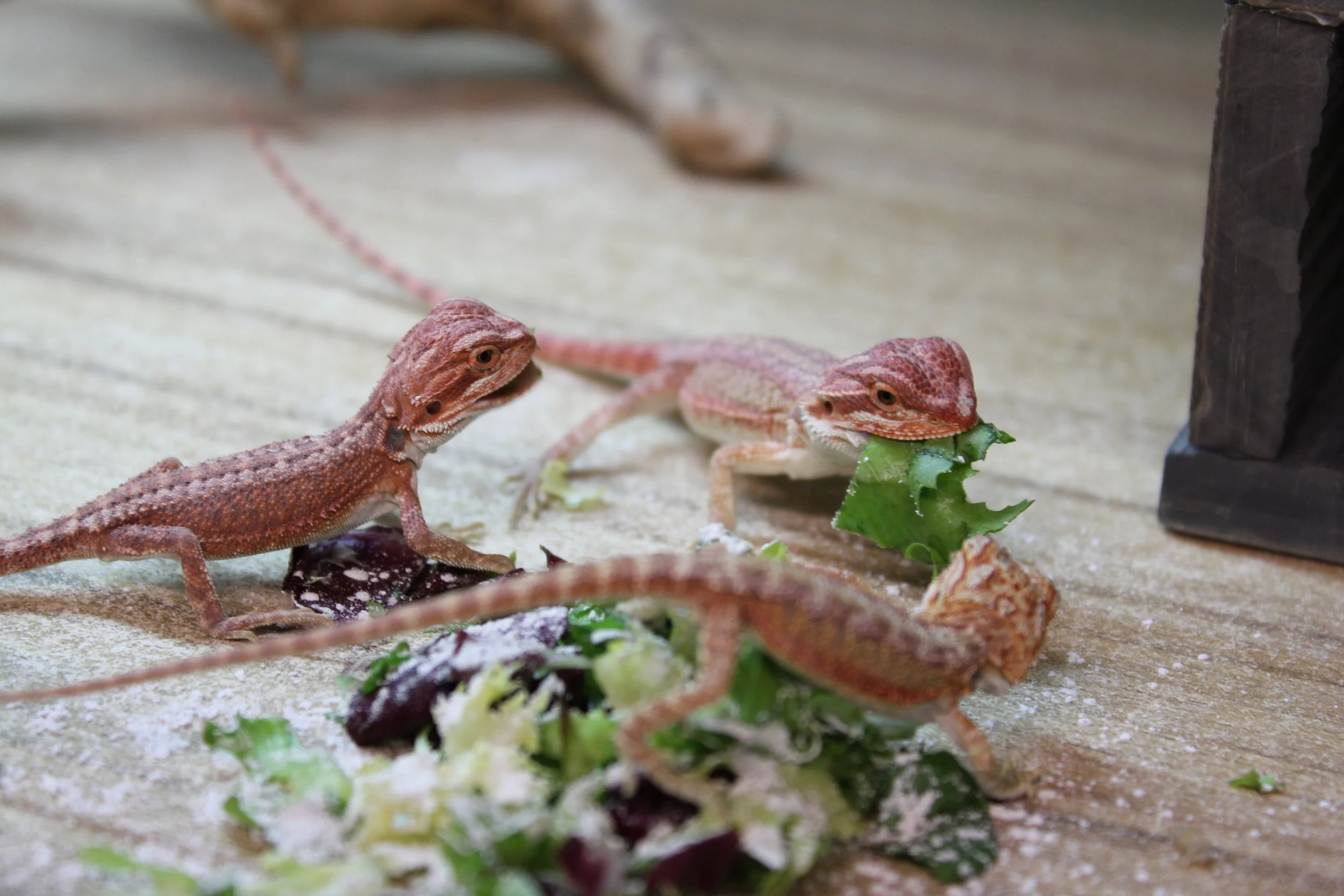
Your dragon should be fed salad every day (with supplements sprinkled on top) to provide them with the nutrients that help keep them healthy. Staple salads that can be fed daily are rocket, spring greens, coriander, lambs lettuce, dill, watercress, frisée, endive, escalope, radicchio and dandelion. Kale, bok choy, turnip greens, alfalfa hay, romaine lettuce, iceberg lettuce and peeled cucumber are salads that can be fed occasionally to your dragon.
Fruits and some vegetables have too much sugar which can cause obesity and mouth rot. These include strawberries, blueberries, banana, butternut squash, peppers etc and should NOT be fed to your dragon. Avocado, rhubarb and onions are TOXIC to bearded dragons so should never be given to them. Spinach is not good for them either as it prevents the uptake of calcium.
Bugs
Bearded Dragons are naturally omnivorous and require a significant amount of protein in the form of live bugs at a young age when they’re growing fast. It is important to know the difference between staple bugs and occasional treats. Bugs classed as treats should be fed sparingly as they contain a lot of fat and are poor quality nutritionally. Treats however can be useful for dragons that need to put on weight. Whether staple or treats, make sure to dust the bugs with the correct supplements. Staple bugs can be crickets, locusts, calci-worms, Dubai roaches or silkworms. Treat bugs meal worms, morio worms or wax worms.
Below around 200g dragons should be eating bugs daily. Above 200g and up to adulthood you should feed your dragon bugs every other day. When your dragon is fully grown at two years of age it’s should only be fed bugs twice a week unless it is underweight. The fat pads on your dragons head and tail should be slightly rounded. If they are flat or sunken your dragon is underweight. The size of the bug you feed your dragon is so important. It is not advised to fed any insect that is longer than the distance between your dragons eyes when looking down at its head. Feeding your dragon bugs that are too large can cause impaction.
Support
We understand that when wanting to take on a new pet most people want to get it right first time. Like most things there is a lot of information available and differing opinions. We ensure you receive the correct and up to date information to make sure you invest correctly, first time. No question is too small for us here at EMS Dragons, and we would rather you ask than you be confused. It’s all part of the service we offer and it lasts the lifetime of your dragon!
Cleaning
Regular spot cleans of your vivarium are important to remove the dragon poops and leftover salad/bugs. We recommend you use an F10 reptile disinfectant. A steam cleaner is very useful for removing stubborn dragon poop residue from vivarium rock-work and ornaments. Steaming is also the only way to reliably kill coccidia spores and other parasites.
Please note it is very important to remove the bearded dragon from the vivarium before steam cleaning so they do not get a respiratory infection. Only return it to the vivarium when the humidity has dropped back to 40%
Contact us
Interested in working together? Prepared to set up with the above advise?
Get in touch with us via WhatsApp on 07766626646. We can’t wait to hear from you!